Epoxy Coatings For Pipelines: Corrosion Protection In Harsh Environments
Gas, oil, and even drinking water are transported through pipelines. Any failure can disrupt the supply chain. Given the conditions under which industrial pipelines operate, there are typical problems that must be avoided. Among them is steel corrosion, which can occur due to typical exposure to moisture. Temperature fluctuations, immersion, and corrosive soils are also factors. All of these can lead to infrastructure failures if they occur.
That’s why you should never underestimate the importance of choosing the right epoxy coatings for pipelines. This decision can determine whether the pipeline’s service life is extended or whether there are operational shutdowns that cost thousands of dollars. We’ll tell you all about it here.
What Makes Epoxy Coatings Effective For Pipeline Corrosion Protection
Broadly speaking, there are two key reasons to use steel pipes to combat corrosion:
- They adhere firmly to the substrate.
- They effectively create a low-permeability barrier.
Let’s take a look at how they work and how to choose the right option.
How Two-Part Epoxy Coatings Bond To Steel Pipelines
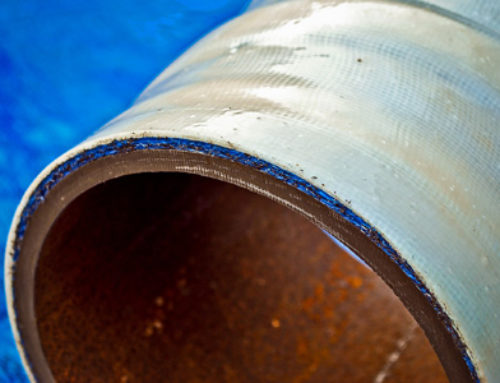
An epoxy coating consists mainly of a resin and a hardener, which react chemically as they cure. This creates a thermosetting film. Unlike conventional paints, the material does not “dry” through solvent evaporation. Instead, a highly resistant chemical structure is created.
A reaction occurs that forms a continuous barrier with excellent adhesion to the steel, which has been previously prepared by shot blasting. The anchor profile created during surface preparation allows the coating to adhere mechanically. The result of all this is maximum long-term protection against moisture, oxygen, and numerous common chemical agents.
Fusion-Bonded Epoxy vs. Liquid Epoxy Coatings For Pipelines
Did you know that not all epoxy systems serve the same purpose? Learn about the main differences between these two popular alternatives:
| Characteristic | Fusion-Bonded Epoxy (FBE) | Liquid Epoxy |
| Application method | The dry powder is applied electrostatically to preheated pipes (approx. 450–500 °F). | It is a 100% solid system applied with a brush, roller, or multi-component spray equipment. |
| Curing | It fuses and cures in a matter of seconds. | Curing occurs after application, depending on environmental conditions and the manufacturer’s specifications. |
| Application location | Primarily in the factory (mill-applied). | Mostly in the field (field-applied). |
| Typical applications | Popular for new, factory-coated pipes. | Field joints, tie-ins, repairs, and rehabilitation of existing pipes. |
| Typical thickness (DFT) | Approximately 12–16 mils. | Varies by project. |
| Best use | New installations with factory-coated pipes. | Maintenance, repairs, and rehabilitation projects performed in the field. |
Rule of thumb: Fusion-bonded epoxy pipeline coating (FBE) is typically specified for new pipes, while liquid systems work best for maintenance or on-site installation work.
How Epoxy Coatings Work Alongside Cathodic Protection
A coating is always the first line of defense against corrosion. That is why it is so important for it to be effective. Cathodic protection, in turn, functions in a complementary manner. It helps protect small areas not covered by the coating. In those areas, the coating must be inactive to reduce the current draw of the cathodic protection system.
The Harsh Environments That Put Pipeline Coatings At Risk
Not all piping systems face the same conditions. There are factors that come into play: soil type, saltwater, temperatures, or the chemicals being transported. For this reason, the challenges can vary from case to case, requiring different epoxy systems.
Corrosive Soils And Buried Pipeline Environments
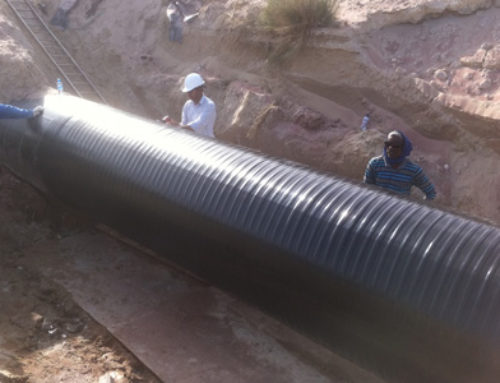
In buried pipelines, conditions vary widely. Are there soils with low resistivity, the presence of chlorides, sulfate-reducing bacteria, and continuous cycles of wetting and drying? All of these factors can accelerate the corrosion process if the protective system is damaged during backfilling or due to ground movement.
Saltwater Immersion and Offshore Pipeline Exposure
Permanent immersion is the defining characteristic of offshore installations. Added to this are hydrostatic pressure and high salt concentrations. These conditions require systems specifically formulated for immersion service.
Chemical, Temperature, And Pressure Extremes On Pipelines
From refineries and chemical plants to the mining industry and power generation, these sectors can benefit from epoxy coatings designed for harsh environments. These locations experience significant temperature fluctuations and are exposed to aggressive substances. However, it is essential to use formulations developed specifically for these conditions.
Keep in mind that standard systems have operating limits defined by each manufacturer.
How Epoxy Coatings Stop Corrosion On Steel Pipelines
The purpose of any epoxy system is to create a barrier between the steel and the environment. However, beyond its physical properties, other corrosion control strategies must be considered to maintain the integrity of the coating throughout the pipeline’s service life.
Sealing Pipelines From Moisture, Oxygen, And Chlorides
Corrosion occurs when exposed steel, moisture, and oxygen are present. Once cured, the epoxy system forms a low-permeability film, slowing the progression of corrosion.
Resisting Cathodic Disbondment And Epoxy Coating Failure
It is essential to follow standards such as ASTM G8, ASTM G42, and CSA Z245.20. These standards evaluate the coating’s ability to remain adhered when a defect is exposed to the cathodic protection system.
Good performance in these tests prevents the coating from peeling away around the damage and ensures that it continues to protect the pipeline.
What Pipeline Coating Failure Costs Operators
No one wants a protection system to fail. But if it does, the consequences far exceed the cost of the coating. A repair may involve excavation, operational disruptions, segment replacements, or regulatory inspections and reporting. That’s why it’s so important to choose the right pipeline corrosion protection coatings. This is a smaller investment than dealing with premature failure.
Choosing The Right Epoxy Coating For Your Pipeline Environment
To clarify: there is no single coating that is universally suitable for all applications. Several factors must be taken into account when making a selection. Primarily: operating temperature, type of service, the environment in which it will be exposed, and regulatory requirements. That is the best way to ensure good performance and avoid maintenance costs.
Matching Epoxy Coatings to Pipeline Operating Temperature
One of the main criteria for selecting a coating is the operating temperature. Each formulation has limits that must be specified. You can find this information in the manufacturer’s technical data sheet.
Abrasion-Resistant Epoxy Coatings for Bores and Rocky Backfill
In cases involving directional drilling and backfill with rocky material, mechanical damage may occur during installation. It is common to incorporate additional abrasion-resistant layers to complement the primary protection system.
NSF/ANSI 61 Epoxy Coatings For Potable Water Pipelines
Certain standards must be followed when piping is used to transport drinking water. The main one is NSF/ANSI 61. The purpose of this standard is to ensure that the water is safe for human consumption and that no contaminants are released into it.
Epoxy Coating Compatibility With Existing Pipeline Wraps
Epoxy coatings should be combined with petroleum-based tapes, viscoelastic systems, or even composite membranes. This applies in certain cases. Do not begin any work without verifying the compatibility of the materials.
Applying Epoxy Coatings To Pipelines In Harsh Field Conditions
Choosing the right product is important, but the quality of application is even more so. It is the main factor that affects the final performance.
Surface Preparation Standards For Pipeline Epoxy Coatings
Generally, industry specifications require SSPC-SP 10 / NACE No. 2 surface preparations with a roughness profile of approximately 2–4 mils. If you are in a coastal environment, we also recommend checking for the presence of soluble salts beforehand. Working with an industrial epoxy distributor in the Southwest can also provide access to surface preparation products.
Dew Point, Ambient Conditions, And Epoxy Cure Windows
The substrate temperature must be at least 5 °F above the dew point during application and curing. This is what prevents condensation. You must also follow the recoating intervals specified by the manufacturer. If you exceed these intervals, you’ll have to sand the surface. Otherwise, the mechanical strength will decrease.
Film Thickness Requirements For Pipeline Corrosion Protection
Do not apply a thickness less than that specified. Doing so will only reduce the system’s barrier performance. Nor should you apply more “just in case.” This can cause cracking or problems during curing. The final thickness should be exactly as specified in the corresponding technical data sheet—no more, no less.
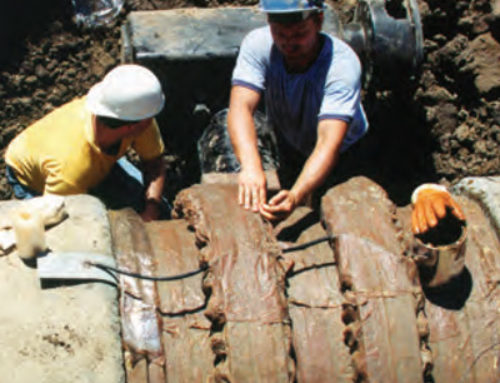
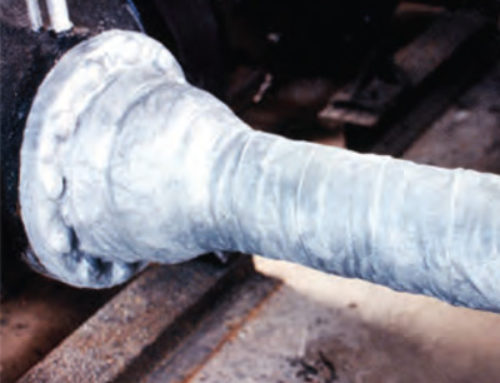
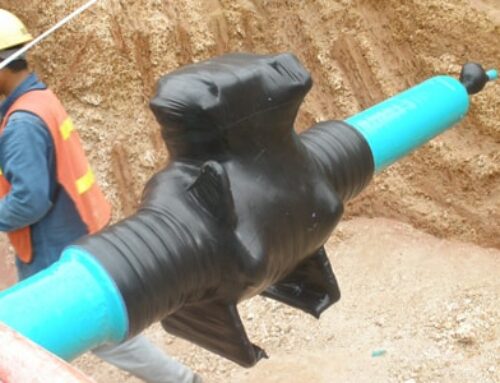
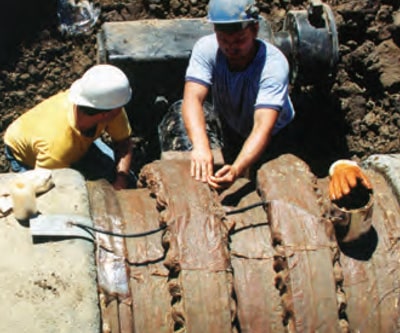
Protecting Field Joints, Girth Welds, And Coating Repairs
Welded joints are often the most vulnerable point. You should always prepare this area carefully, coating them with compatible systems that ensure continuity with the original coating.
Holiday Testing Epoxy Coatings Before Backfill
Before the final coating application, perform holiday testing. You can do this using high-voltage equipment, in accordance with standards such as NACE SP0188. All of this, along with adhesion testing, helps confirm that the coating system was applied properly. If not, you’ll be able to detect and correct the issue. It will be easier and more cost-effective than making repairs later.
How Epoxy Coatings Extend Pipeline Life In Harsh Environments
The service life of the assets is extended. Since corrosion is the number one enemy of pipes, you avoid spending money on costly repairs. In turn, operations will run smoothly, and future maintenance will be simpler.
Service Life Expectations For Pipeline Epoxy Coatings
The system can provide protection for 20 to 30 years. This is true provided that the system has been properly specified, installed, and inspected. It also depends on the operating conditions and the maintenance program in place.
Recoating Pipelines vs. Full Pipe Replacement
Many operators wonder whether it’s better to rehabilitate an existing pipeline or replace it entirely:
| Aspect | Recoating | Full pipe replacement |
| Initial investment | Lower | Higher |
| Duration | Shorter | Longer |
| Impact on operations | Less operational downtime | Possible prolonged shutdown |
| When to choose this option | If the pipes remain structurally sound | When there is severe damage that compromises continuity |
Whenever possible, try to refinish the coating. That offers the best ROI. However, sometimes it will be necessary to replace it entirely.
Industries That Rely On Epoxy Coatings For Pipeline Protection
Here are some industries where corrosion protection is commonly needed:
- Mining. There are high levels of abrasion and continuous wear because mineral slurries are transported through the pipes.
- Power generation. Here, a thermal cycle involving high temperatures accelerates corrosion and degrades the protective coating.
- Refineries and chemical plants. There are many aggressive chemicals. Therefore, the coating must be of high quality.
- Water. Especially when transporting drinking water, it is necessary to comply with all current health and safety regulations.
- Oil and gas. Collection and transport pipelines must resist soil corrosion. The coating is key in this regard.
Not sure where to start when it comes to protecting your pipelines? An experienced industrial coating supplier can help you.
Frequently Asked Questions
Still not sure how this protective barrier for pipelines works? Clear up your doubts.
How Long Do Epoxy Coatings Last on Pipelines?
Between 20 and 30 years, provided the system is specified and applied correctly.
What’s the Difference Between FBE and Liquid Epoxy for Pipelines?
FBE is typically applied in the factory to new pipes. Liquid epoxy is used for joints, repairs, and rehabilitation in the field.
Can Epoxy Coatings Be Applied to an Existing Pipeline in the Field?
Yes. There are liquid systems specifically formulated for the maintenance, repair, and rehabilitation of existing infrastructure.
Do Epoxy Coatings Replace Cathodic Protection?
No. The coating serves as the primary barrier. Cathodic protection is used to protect small exposed areas.
Are Epoxy Coatings Suitable for Buried Pipelines?
Yes. This is true provided the system has been designed for buried service and is applied according to the manufacturer’s specifications.
Why Is Surface Preparation So Important?
Because even the best coating can fail prematurely if the steel is not properly cleaned and prepared before application.
Specifying Epoxy Coatings For Your Next Pipeline Project
Every project is different. Many variables must be evaluated before selecting a protection system. This facilitates access to qualified manufacturers, technical documentation, and complementary products needed for each stage of the project.
That’s where we at B&W Distributors can help. Since 1995, we’ve served a wide range of customers throughout the Southwest. See what they have to say about us:
| Great company. Friendly staff. | they are on top of it. they have what we need and customer service is top notch!!! i will continue to be a customer for our blasting and painting company. | Great people there. Very helpfull |
| Tedd Gibson ★★★★★ | Jacqueline Casarez ★★★★★ | Mike Fryling ★★★★★ |
Are you looking for reliable solutions to protect your pipes from corrosion? We can help you identify the most suitable system based on the specific conditions of your operation. Contact us.

B&W DISTRIBUTORS INC.
Tel: (480) 924-8883
Email: [email protected]
Web: https://www.bwdist.com/
ARIZONA
341 Stealth Ct
Mesa, AZ 85215
CALIFORNIA
341 Stealth Ct
Livermore, CA 94551